2024 - design and software development
risd suits
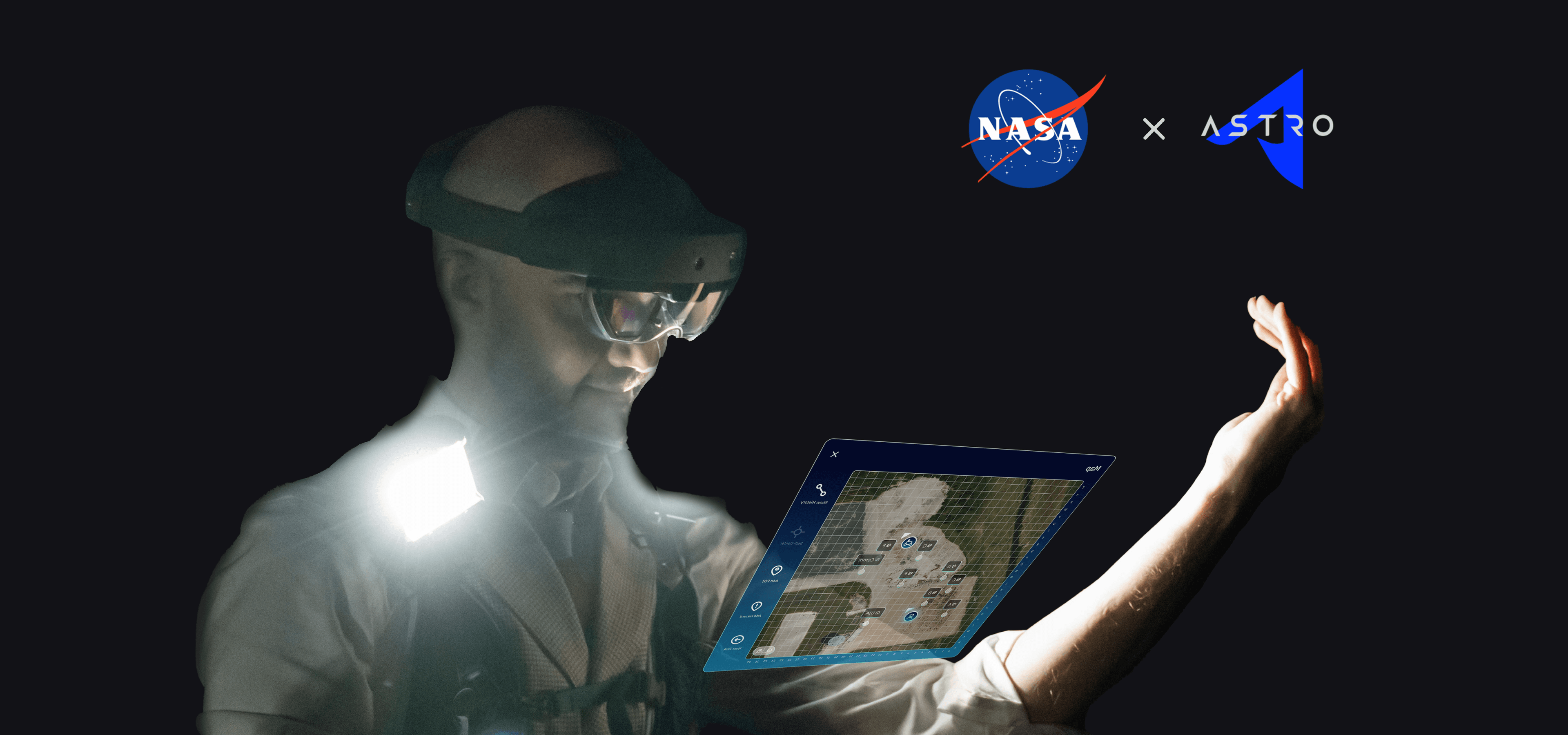
An AR navigation program to assist astronauts in traversing the Martian surface during spacewalks. The project was selected as a top 10 national finalist for its innovative approach.
How can AR interfaces help astronauts efficiently complete Mars missions when facing harsh lighting conditions, cognitive overload, and severe mobility restrictions in bulky spacesuits?
- Adaptive Visibility
A navy-to-teal gradient optimized for Mars's orange, harsh lighting environment, providing high contrast and clear visibility under extreme conditions.
- Low-Cognitive Load Interface
A hand-tracking menu provides instant access to a simplified map UI that displays only essential information and controls, reducing cognitive overload and keeping primary features easily accessible.
- Gesture-Based Control
Auto-checking progress bars and auto-initiated camera functions reduce manual interactions and unnecessary movements, addressing mobility restrictions.
Ideation & Concept Development
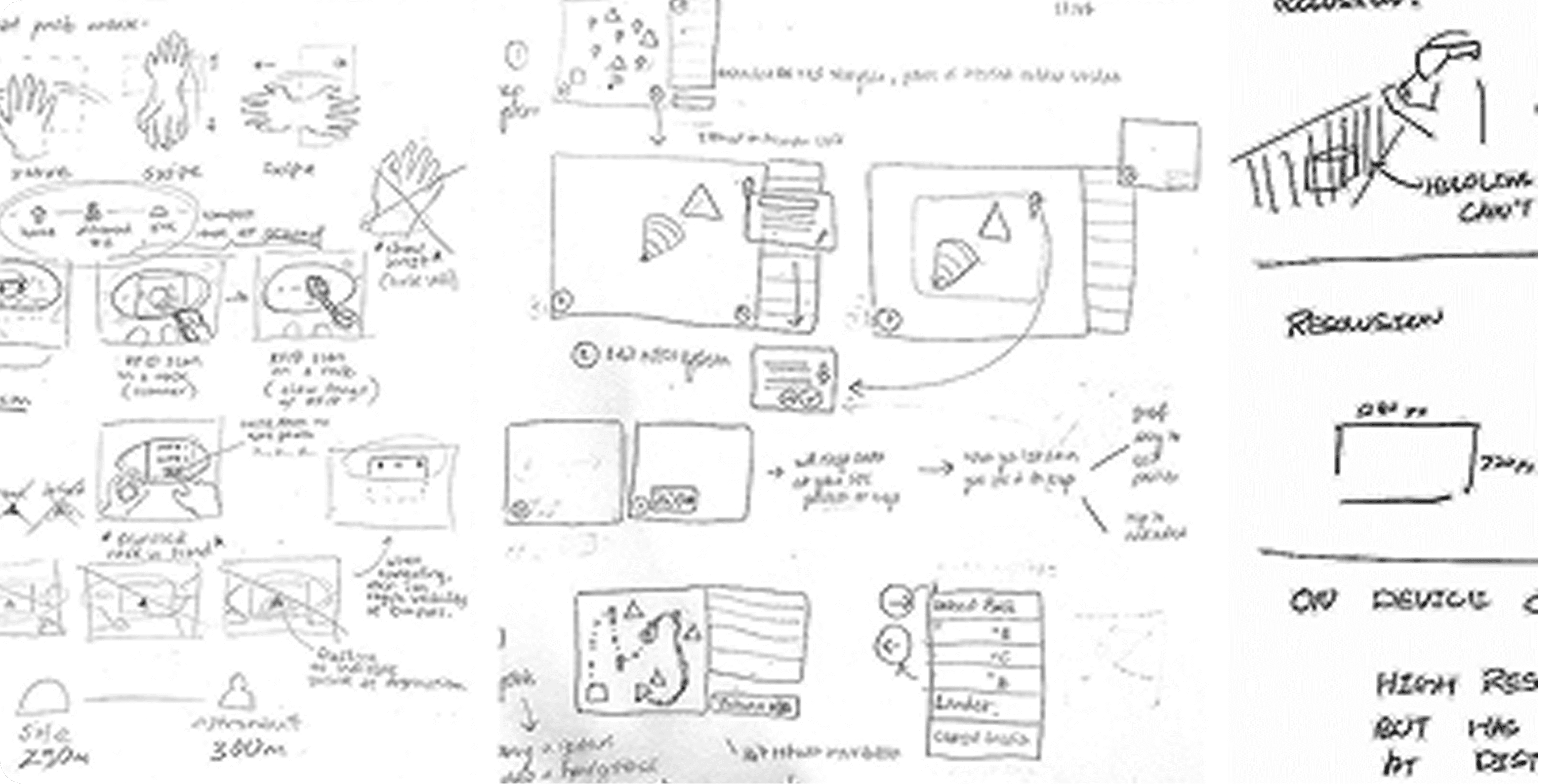
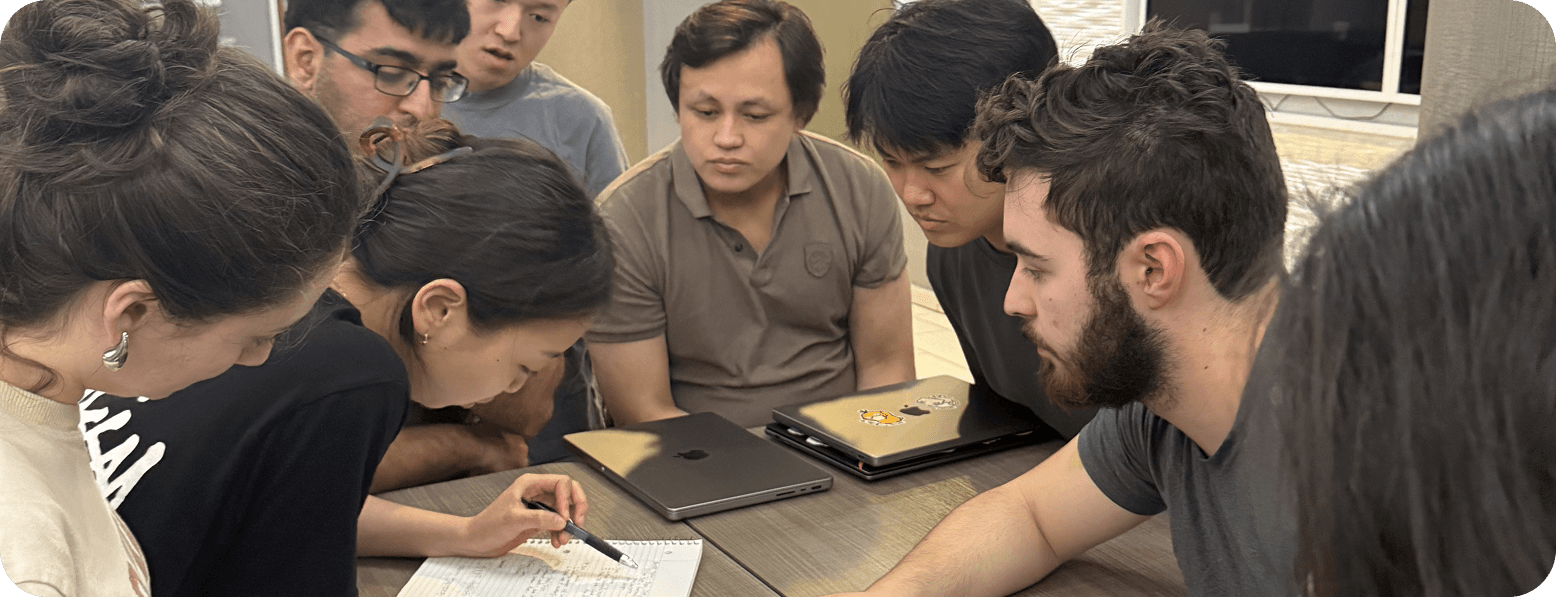
After identifying key pain points and goals, the team held a focused brainstorming session to generate initial solution ideas.
Design & Dev Collaboration
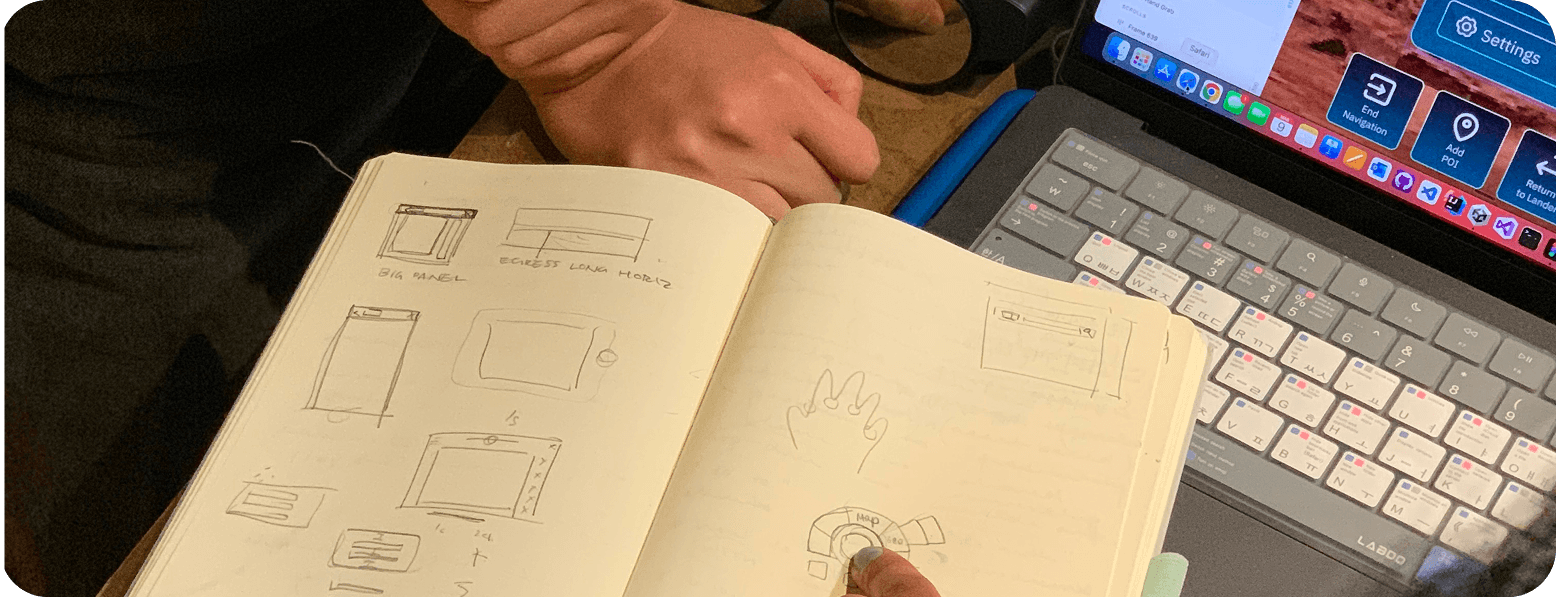
As a designer with a development background and serving as dev team lead, I helped bridge gaps between design and engineering by accommodating conflicts and aligning both teams around cohesive goals.
Field Usability Testing
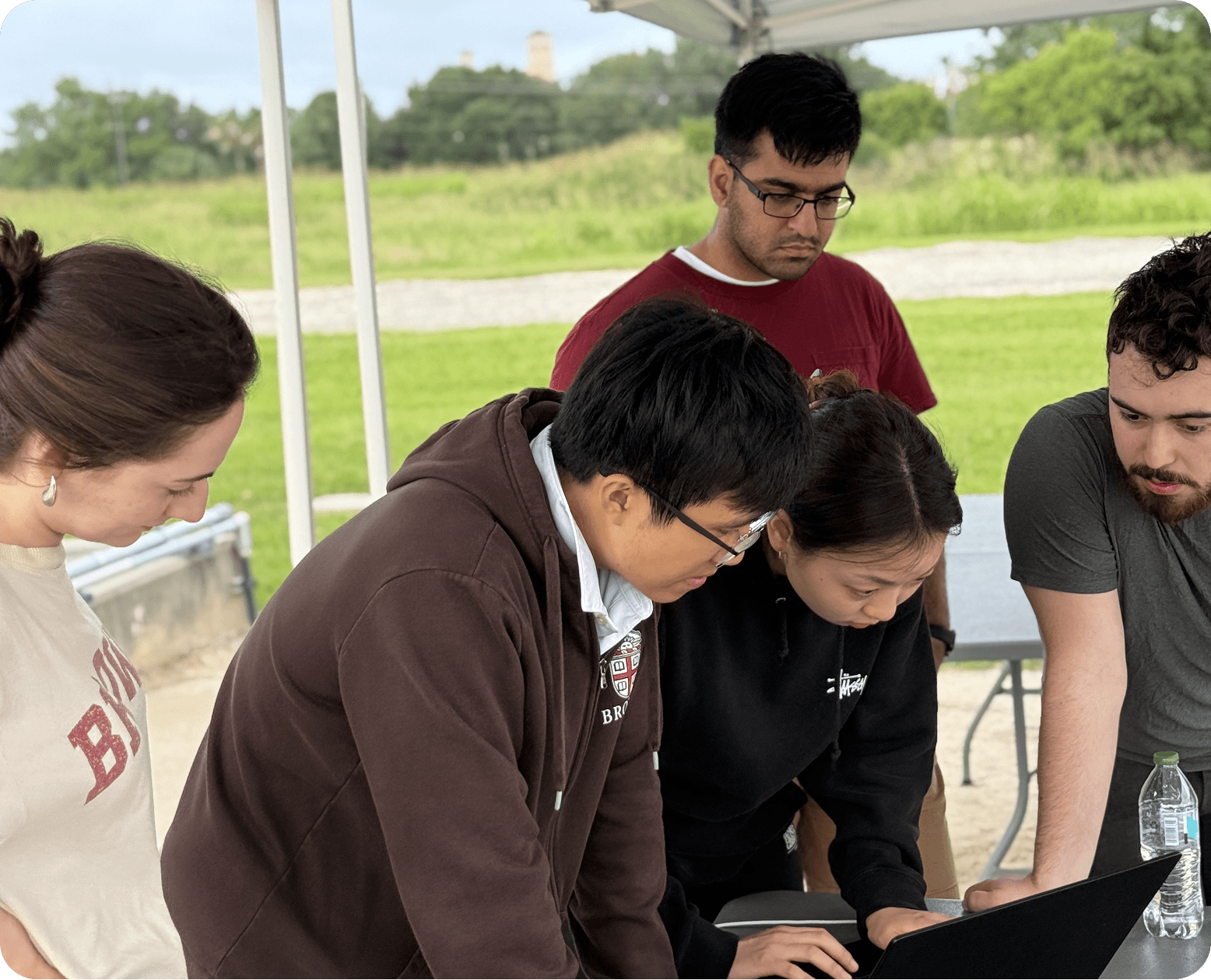
Testing was conducted at Roger Williams Park in daylight and open terrain, involving both design and development team members.
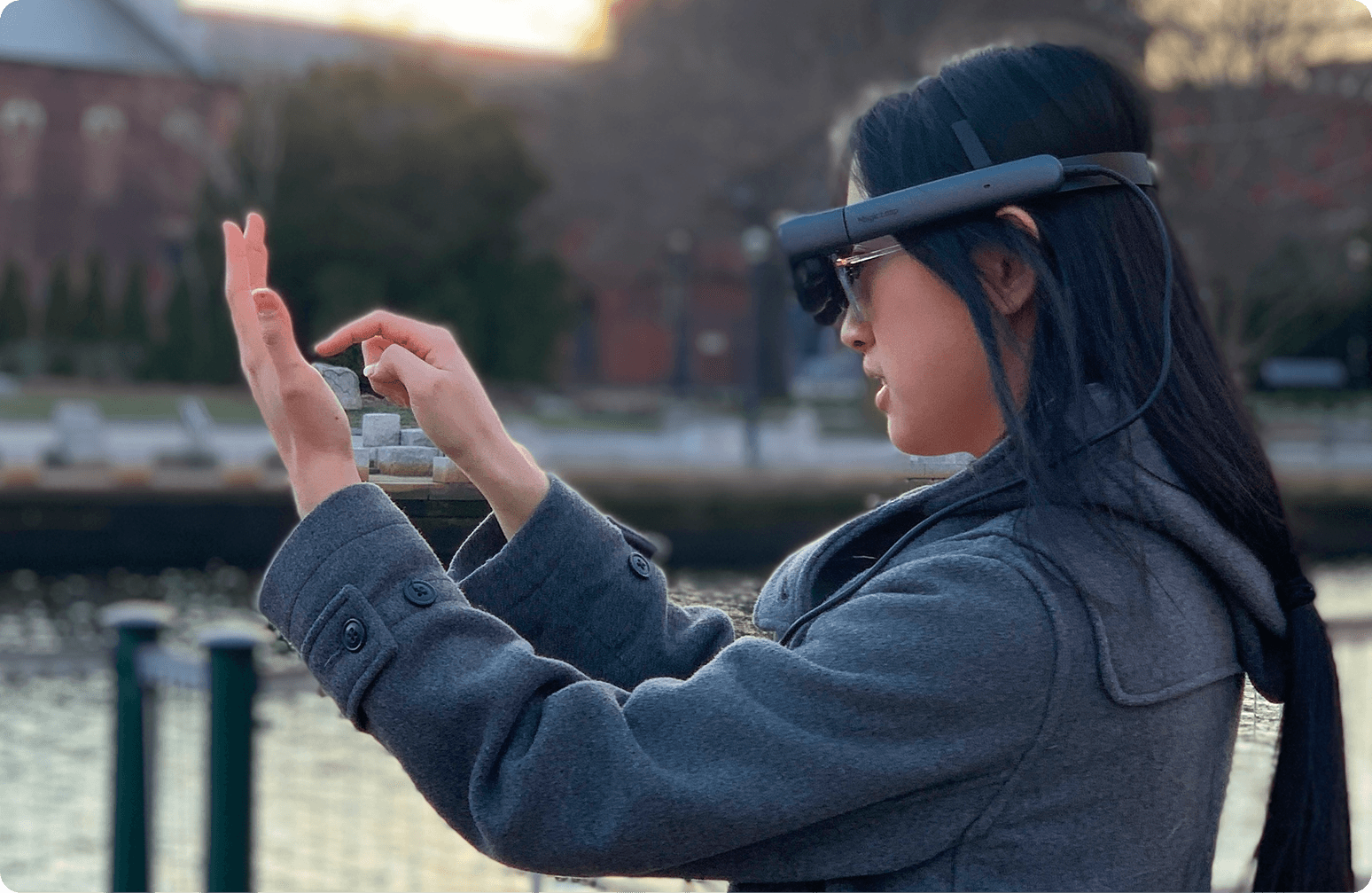
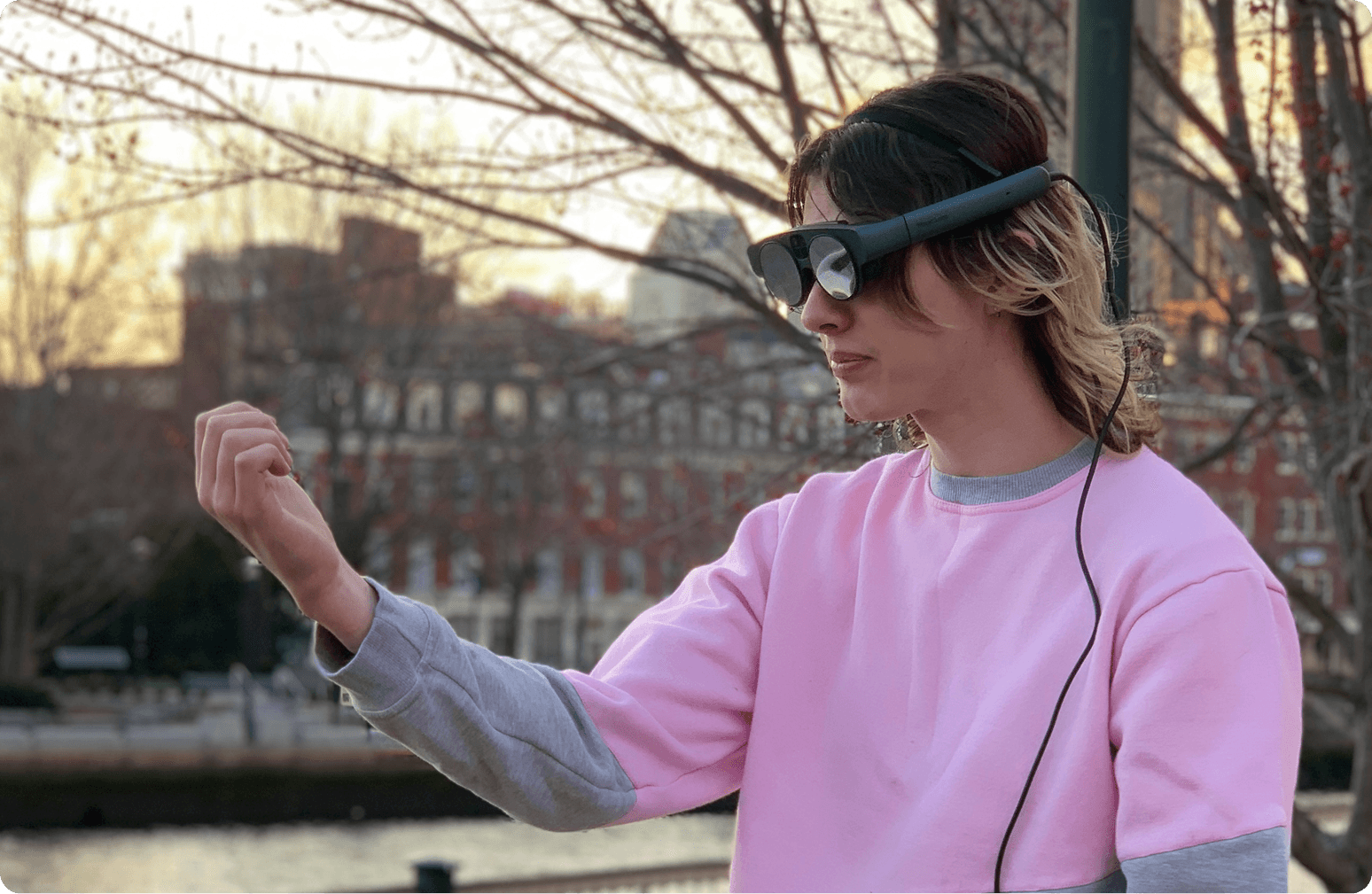
In harsh lighting and challenging conditions, increased hand-tracking precision was necessary.
Position the UI closer to improve comfort and reduce head movement in physically constrained conditions.
Precise head tracking was required to ensure the UI followed without latency during time-sensitive missions.
Test Week at NASA Johnson Space Center (JSC)
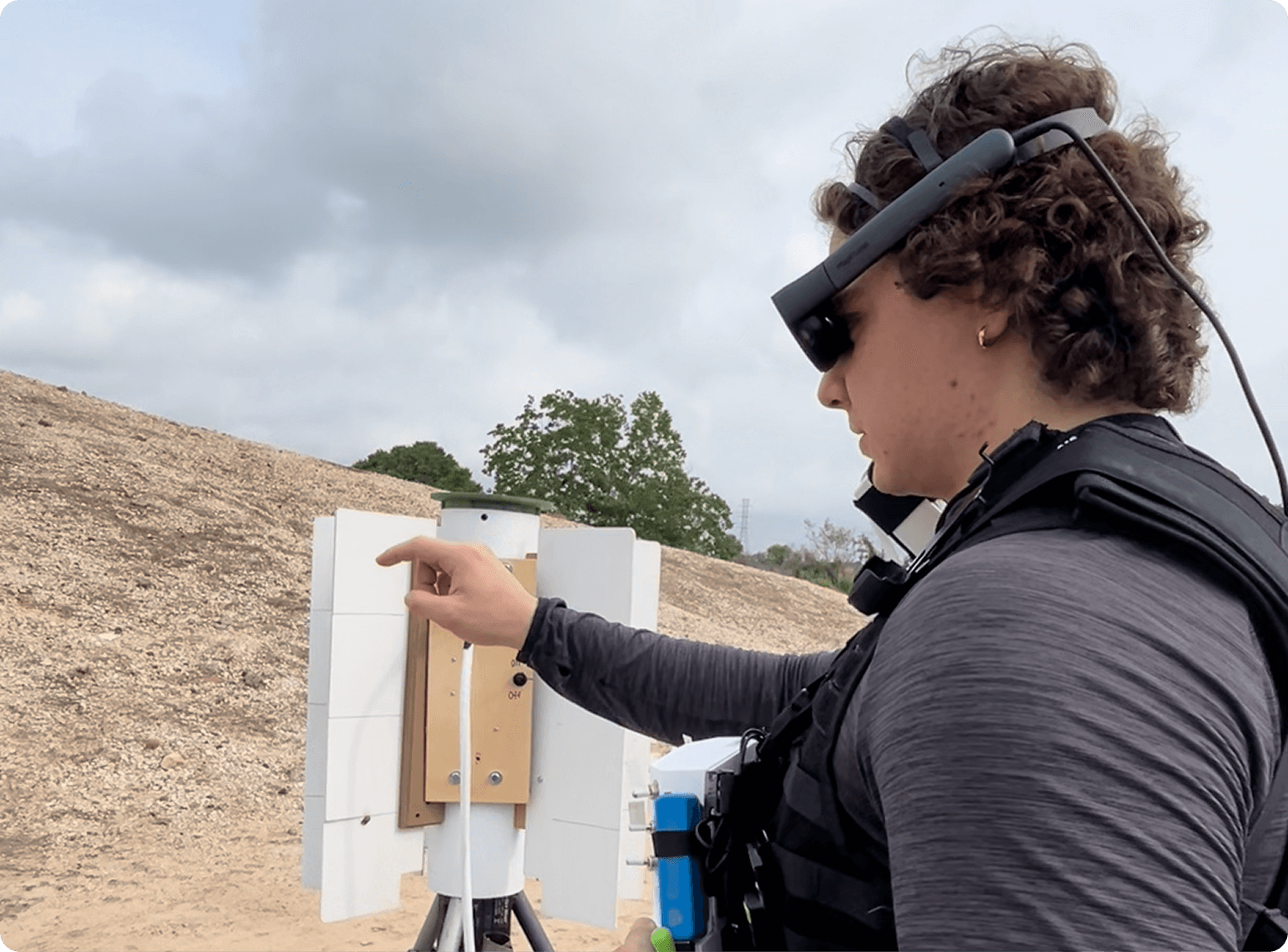
As challenge finalists, our RISD Astro team traveled to Houston, TX, to present our work and conduct final product testing at the Johnson Space Center (JSC) facilities. I was one of the four team members selected for the on-site testing.
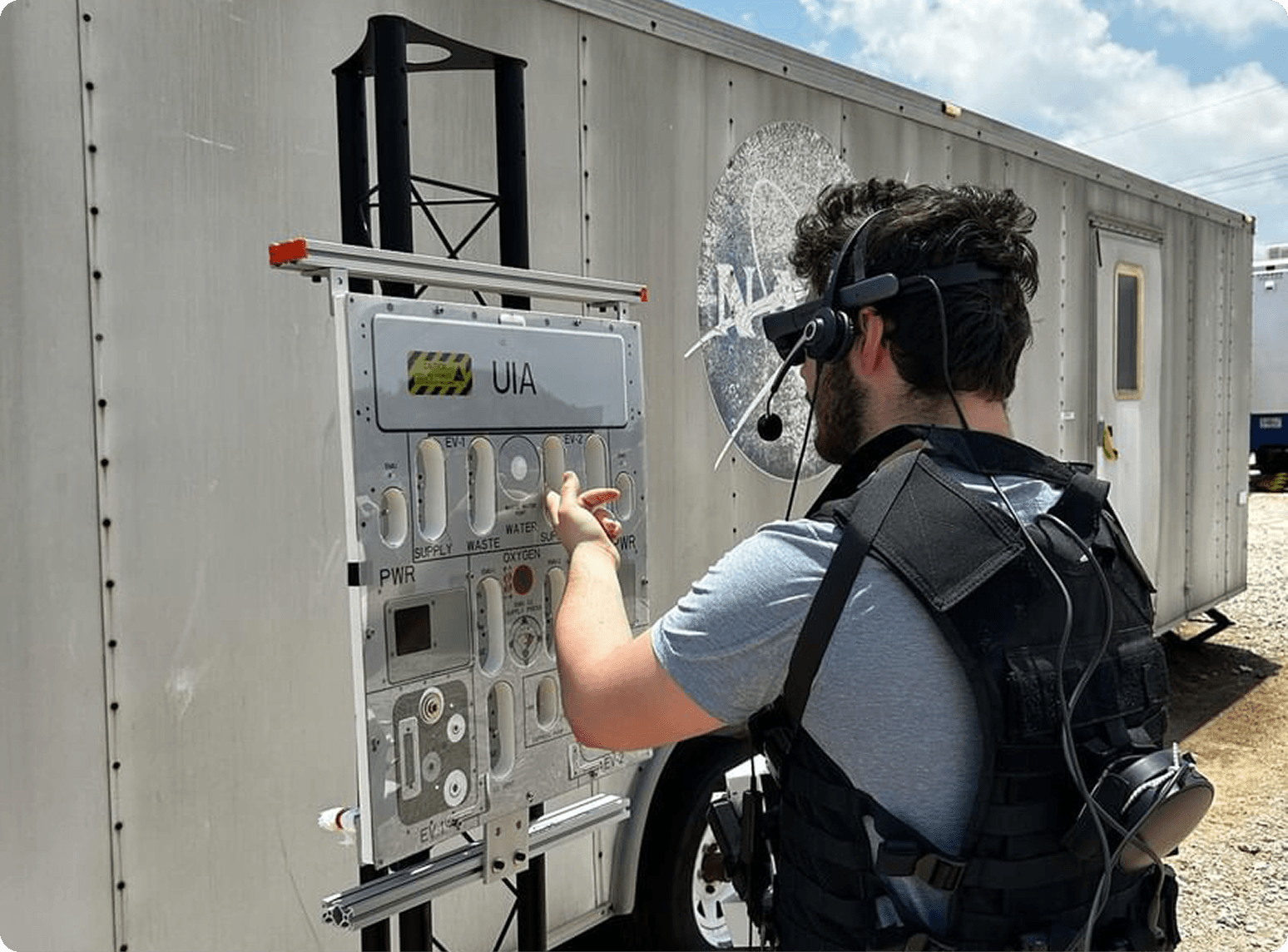
 Acronym Clarification
Add tooltips or brief explanations for acronyms to improve accessibility and comprehension.
 Map Panel Toggle
Enable easy toggling of the map panel to improve navigation and obstacle awareness.
 Color Accessibility
Replace orange hazard pins in the map with accessible colors or visual alternatives.
01/
Research Over Assumptions
Lacking prior experience with the Mars environment, I relied on stakeholder interviews over assumptions, strengthening my ability to make objective, research-driven design decisions.
02/
Effective Cross-Functional Collaboration
Working closely with designers and developers reinforced the importance of shared goals, continuous communication, and balancing design vision with technical constraints.